
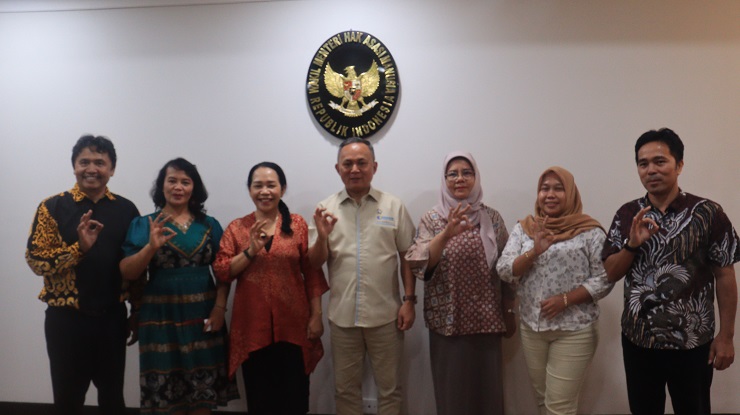
JAKARTA – The Confederation of All Indonesian Trade Unions (KSBSI) submitted a position paper on business and human rights to the Indonesian Ministry of Human Rights.
Representatives from KSBSI and its affiliated federations were present, including KSBSI President Elly Rosita Silaban; Maria Emeninta, Coordinator of ACVi Asia; Sulistri, Secretary General of the Central Executive Board of the FSB KAMIPARHO; Edward Marpaung, Secretary General of F LOMENIK; and Carlos Rajagukguk, Chairman of the Central Executive Board of the FSB NIKEUBA. They were received by Mugiyanto, Deputy Minister of Human Rights of the Republic of Indonesia, and his staff in the meeting room of the Ministry of Human Rights office in Jakarta on Thursday (November 20, 2025).
During the meeting, KSBSI President Elly Rosita Silaban expressed her gratitude for the opportunity to receive the audience. KSBSI expressed its appreciation for the Deputy Minister’s willingness to take the time to host the visit.
KSBSI also reaffirmed its commitment to continuing to protect workers’ interests, particularly regarding business and human rights issues.
“Regarding regulations on Human Rights Due Diligence through the Prisma program, which the ministry is currently developing, we are committed to continuing to monitor and are open to collaborating with stakeholders,” said Elly.
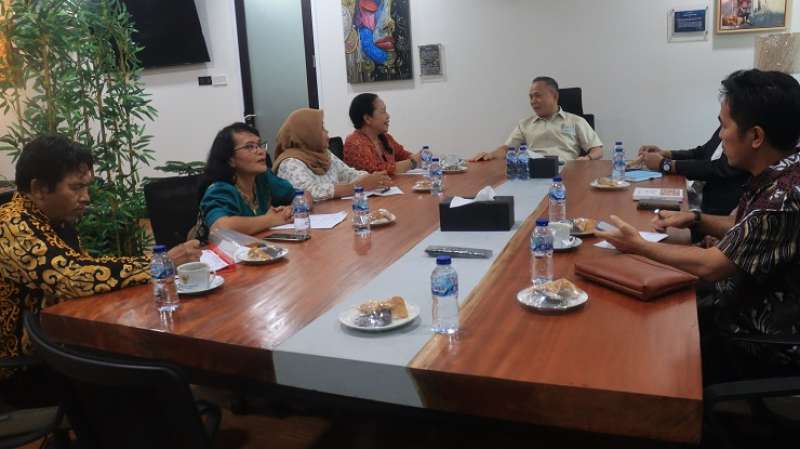
Meanwhile, the Deputy Minister of Human Rights of the Republic of Indonesia, Mugiyanto, welcomed the visit of the KSBSI. He also appreciated the work of the KSBSI, especially on the issue of Business and Human Rights, and the Ministry will open up space for collaboration, especially with labor unions.
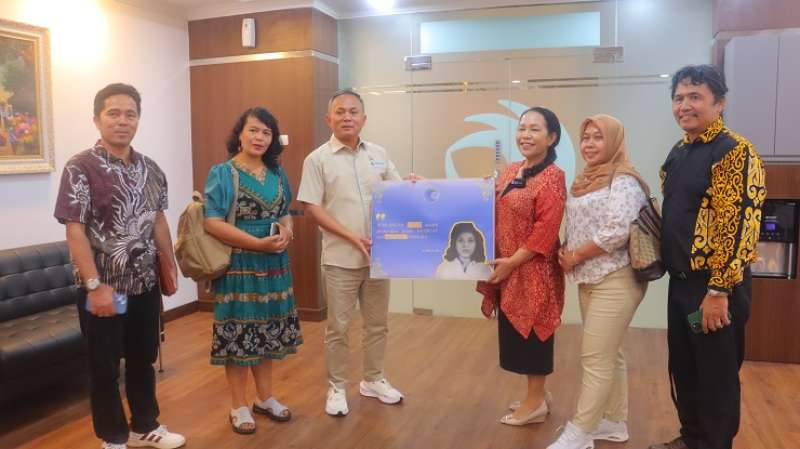
On this occasion, the KSBSI was also given the opportunity to visit the complaints room, named the Marsinah Room, in recognition of the highest human rights award for the late Marsinah, who was recently declared a National Hero of Indonesia for her struggle to uphold labor rights and social justice.
KSBSI also presented and submitted its position paper on Business and Human Rights to the Deputy Minister of Human Rights of the Republic of Indonesia. The paper stated the following:
KSBSI appreciates the government’s persuasive initiative in initiating Presidential Regulation No. 60 of 2023 as a follow-up to the 2011 National Action Plan for Human Rights and Human Rights (RAN BHAM) and is immediately planning a replacement Presidential Regulation as its expiration date approaches.
Labor rights violations in the workplace continue to increase, and government efforts through the PRISMA initiative and the National Strategy for Human Rights will contribute to improvements. However, KSBSI has observed several issues that require more serious and comprehensive efforts, which we outline in the following points:
- Policy: New regulations are urgently needed to replace Presidential Regulation No. 60/2023, preferably in a stronger form, such as a law. Indonesia could potentially make a strong move, similar to Japan and Korea, which have initiated Human Rights Due Diligence regulations.
- Participation and Inclusion: Labor rights have not been considered part of human rights. Therefore, violations of labor rights are considered a specific area of employment, leading to increasingly widespread violations of labor rights, impacting the livelihoods of workers and their families, potentially reducing the human dignity and quality of life for workers. Unfortunately, the involvement of labor unions representing this group has not been considered important and meaningful, as evidenced by their absence from the drafting of Presidential Regulation No. 60/2023, the BHAM Task Force, and the current replacement process.
- Nature and scope of human rights assessments (PRISMA): Previous initiatives were voluntary, so to improve the quality of this government program, it needs to be upgraded to mandatory. This process can be done in stages: for example, prioritized on large-scale multinational companies and state-owned enterprises based on the number of employees or the size of capital. After a certain period, for example, 6 months, it is evaluated and then increased to medium-scale MNCs and so on. The scope of the assessment of the supply chain needs to be given special priority and can also be done in stages of tier 1, 2, 3, etc.
- Assessment indicators: The 13 PRISMA assessment elements, covering a significant number of employment aspects, are quite satisfactory. However, further clarification of sub-indicators is needed to clarify the implementation of the main ILO standards. For example, checking the existence of trade unions, the presence of collective labor agreements (PKB), the implementation of wage scale structures, the presence of OSH committees in companies, etc.
- Complaint and remedy mechanisms: Government initiatives will be more valuable with the availability of complaint mechanisms in the event of human rights violations in the workplace. An objective complaint mechanism with remedial value is needed to compensate victims for losses. In this regard, dialogue is the best approach that can be part of the problem-solving mechanism. The stages of problem-solving and remedy need to be developed bipartitely to ensure ownership and accountability for the regulations.
- Evaluation and transparency: One of the weaknesses of the previous PRISMA system was the closed and non-transparent assessment results, making it unclear who conducted the assessment, the results, and the improvement process. Green, yellow, and red scores made for attractive report cards, but information was difficult to access, thus weakening oversight of the recovery process. It would be beneficial for the government to also provide awards for the green category, or for categories that move up from yellow/red to green. However, this should be done periodically to ensure that the achievements demonstrate sustainable progress.
- Create sectoral projects as pilot projects that will screen good practices and provide momentum to promote companies with good intentions, creating a positive image for Indonesian businesses. As current sectoral issues, the energy, palm oil, and garment sectors could be selected as priority sectoral options.
- An agency or third party is needed to conduct an objective assessment/audit. However, this must be ensured to be independent and free from commercial elements and politicization of the assessment. The best option for labor unions is to conduct a bipartite audit, which requires government-facilitated audit training.
- Massive outreach to the community, workers, and businesses is needed to ensure public support and prepare all parties to enter a new era of Indonesia that is more dignified and worthy of competition while respecting human rights. (RED/Handi)