
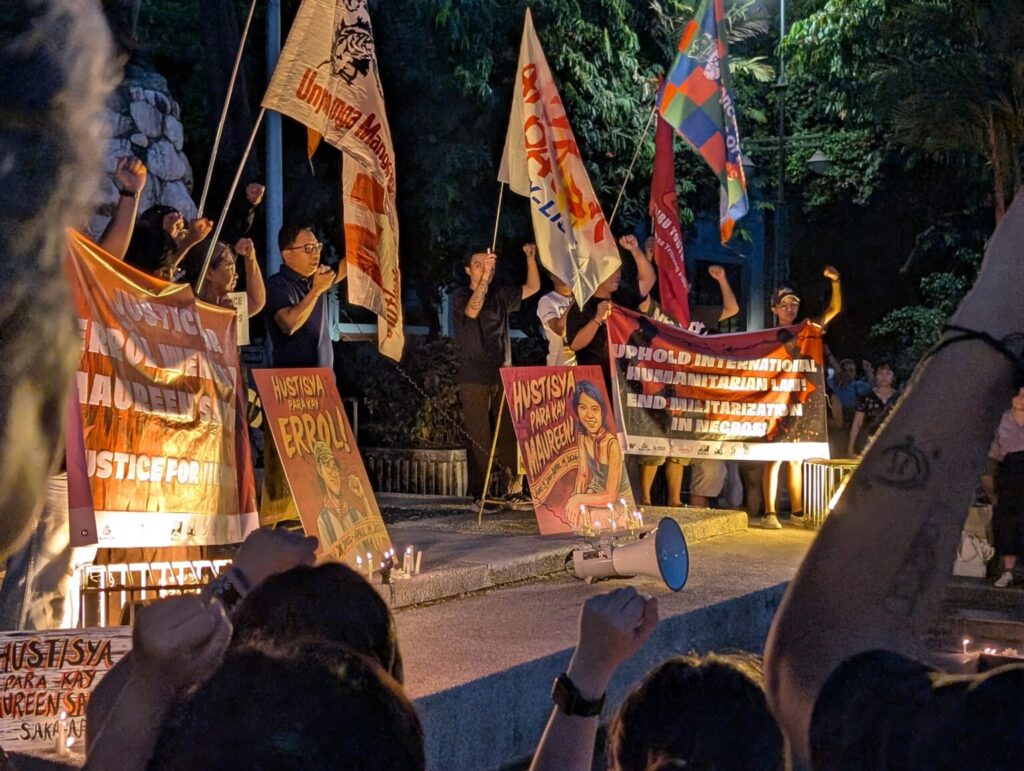
Errol Wendel arrived in Negros with a notebook.
A researcher for the Unyon ng mga Manggagawa sa Agrikultura, he had come to document the tiempo muerto – the dead season, when the sugarcane harvest ends and hunger moves into the homes of farmworkers across the island. He was counting empty plates, not carrying weapons.
On April 19, 2026, soldiers shot him dead in Barangay Salamanca, Toboso.
Wendel was one of nineteen people killed when the Armed Forces of the Philippines opened fire in what the military swiftly described as an armed encounter. But the faces of the dead told a different story.
Among the victims were 8 other civilians: Roel Sabillo, youth farmer; R.J. Nichole Ledesma, community journalist; Alyssa Alano, student leader; Maureen Keil Santuyo, land reform advocate; two minors: Jemina Gumadlas and Dexter Patajo; and two Americans: Lyle Prijoles and Kai Sorem, who had come to document human rights conditions on the island. Their only “weapons” were notebooks and cameras.
An Island Built on Inequality
To understand Toboso, you have to understand Negros.
The island remains one of the most unequal in the Philippines, its landscape carved into haciendas where a handful of sugar barons control land that generations of farmers have tilled without ever owning. Eighty-two percent of rural households remain landless. Organizers have long called it the last bastion of feudalism – a place where asking for fair wages can make you an enemy of the state.
It is in this context that activists, unionists, and researchers are routinely red-tagged – publicly labeled as communist sympathizers – a designation human rights groups say functions, in practice, as a death warrant.
‘One Sister Dead, One in Chains’
Three days after the massacre, the repression continued.
On April 22, an unmarked vehicle intercepted a van in Talisay City. Among those inside was Julie Ann Balora, a National Federation of Sugar Workers organizer and UMA national council member. She and her companions were ordered to kneel on the road. Operatives, she later reported, planted firearms and grenades in their vehicle before placing them under arrest on fabricated charges.
What made her detention particularly cruel: Balora’s sister, Genevieve, had been among those killed in Toboso just seventy-two hours earlier.
A World That Must Not Look Away
On Labor Day, thousands marched demanding justice for the Negros 19. Their demands: accountability for the killings, the immediate release of Julie Ann Balora, and the abolition of the NTF-ELCAC – the government task force critics say has institutionalized red-tagging.
The Kilusang Mayo Uno has taken those demands beyond Philippine shores, calling on international labor federations, human rights bodies, and foreign governments to investigate and condemn the systematic targeting of organizers on the island.
The killing of a researcher and the arrest of another for documenting poverty is not a local matter. It is an assault on the rights of workers everywhere – and the world must not look away. The cane fields of Negros are waiting for the world to respond.
Read the full issue of the May 2026 KMU Correspondence here: