
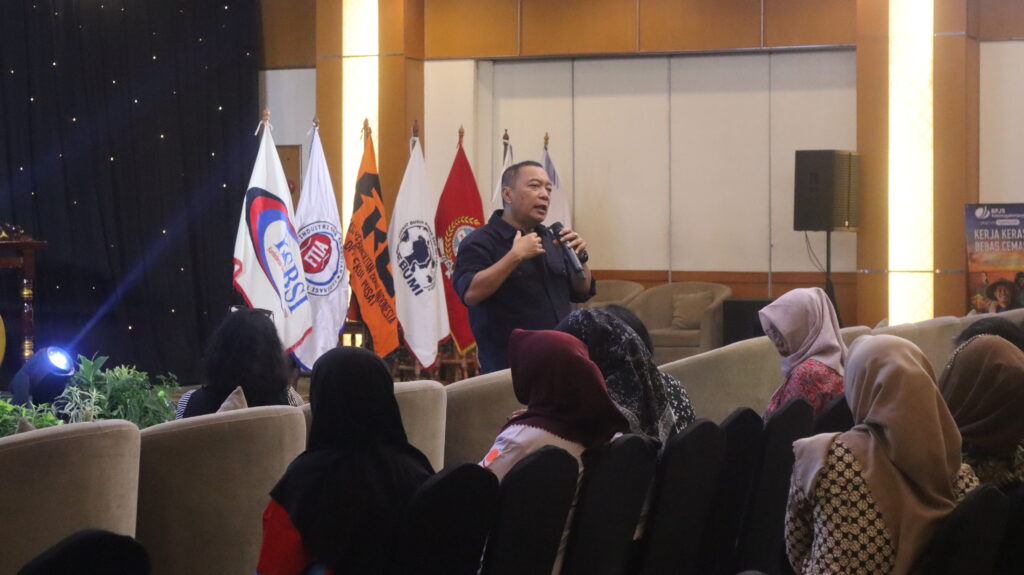
JAKARTA – ACVi Asia held a discussion on ILO Convention 193 on decent work in the platform economy at the 2026 National Working Meeting of the Confederation of Indonesian Trade Unions (KSBSI) in Jakarta on Wednesday, August 26, 2026.
Platform workers have made significant contributions to the economy, yet many still face job insecurity, low social protection, and limited opportunities to advocate for their rights.
Rekson Silaban, Chair of the KSBSI Advisory Board, presented on the topic of Protection of Platform Workers After Birth under ILO Convention 193. He explained the rights framework, definitions, scope, employment relationships, remuneration, and automated systems.
This must be based on fundamental principles and rights in the workplace, occupational safety and health, violence and harassment, promotion of decent employment opportunities, remuneration or compensation equivalent to the minimum wage, social security equal to that of other workers in employment relationships, transparency regarding the impact of the use of algorithmic systems on workers, data protection and privacy, suspension, deactivation, and layoffs, protection for migrants and refugees, and access to dispute resolution.
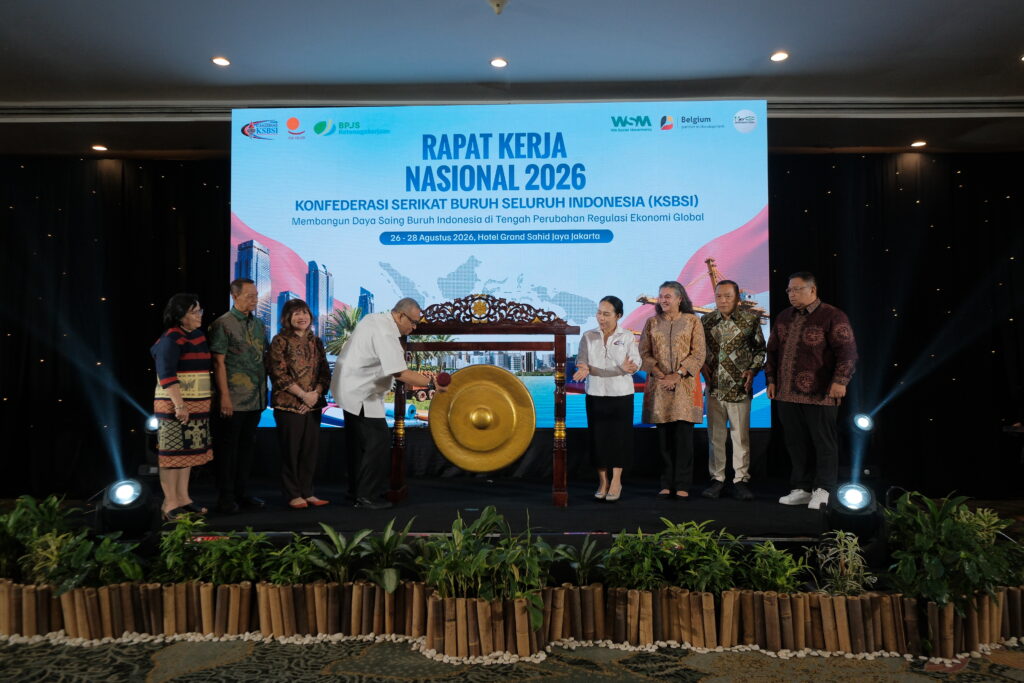
KSBSI National Working Meeting 2026
The All-Indonesian Trade Union Confederation (KSBSI) officially held its 2026 National Working Meeting (Rakernas) at the Grand Sahid Jaya Hotel, Jakarta, from August 26-28, 2026.
The theme of this National Working Meeting was “Building the Competitiveness of Indonesian Workers Amidst Changing Global Economic Regulations.” It was opened by Afriansyah Noor, Deputy Minister of Manpower of the Republic of Indonesia.
In her remarks, Elly Rosita Silaban stated that this National Working Meeting is a routine annual event held by KSBSI, in accordance with the organization’s Articles of Association (AD/ART). The three-day National Working Meeting also aims to conduct an internal evaluation of work programs, both those conducted by the KSBSI National Executive Board (DEN) and the KSBSI-affiliated Federation of Trade Unions (FSB).
“It’s undeniable that every year, the KSBSI faces increasing challenges in fighting for workers’ rights. However, the KSBSI has managed to survive and adapt through internal consolidation and building networks across trade unions, both nationally and internationally,” said Elly.
Elly further stated that the KSBSI, along with the KBPBI, are currently focused on overseeing the Draft Manpower Law (RUU) at the Senayan Parliament Building. They are also conducting political lobbying with faction leaders and the leadership of the Indonesian House of Representatives (DPR RI), providing key points on the Manpower Bill.
“Hopefully, the Manpower Bill, which will be passed in October 2026, will result in legislation that favors workers’ interests,” she explained.
Elly acknowledged that fighting for workers’ welfare cannot be done by labor unions alone.
It requires collaboration with employers, the government, and other partners. “I know the workers’ struggle is not easy, but I hope this KSBSI National Working Meeting agenda can generate new ideas and concepts for the changes we all desire,” she concluded.
Afriansyah Noor expressed a similar sentiment. He hoped that this year’s National Working Meeting (Rakernas) held by the Indonesian Workers Union (KSBSI) would not only generate new ideas and concepts in the labor market but also foster a more harmonious relationship between the government and employers in industrial relations.
“Amidst changing global economic regulations and the development of digital technology, automation, and robotization, we all need to adapt. I believe the role of labor unions today cannot be underestimated. In fact, they are very strategic in responding to the challenges of the times,” he said.
He explained that the role of labor unions goes beyond simply fighting for workers’ rights and interests. They also serve as strategic partners for the government and employers in developing superior and competitive human resources.
“Hopefully, the 2026 KSBSI National Working Meeting (RAKERNAS) will not be merely a ceremonial event. It must also be able to evaluate work programs and generate new, objective ideas amidst current developments. KSBSI must be able to determine the direction of the labor movement and open up space for dialogue and partnerships with all elements of the labor force,” he concluded.
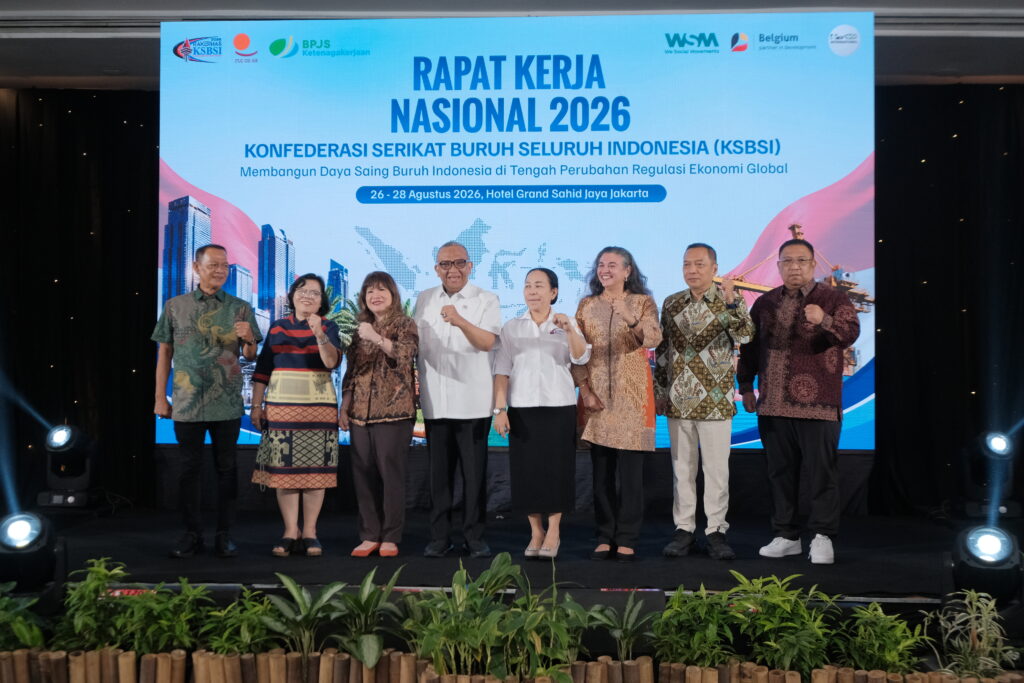
The opening ceremony of the National Working Meeting was attended by Elly Rosita Silaban, President of KSBSI; Dedi Hardianto, Secretary General of KSBSI; Rekson Silaban, Member of the KSBSI Organizational Advisory Council (MPO); Simrin Singh, Director of the ILO for Indonesia and Timor-Leste; Shinta Widjaja Kamdani, Chairperson of the National Leadership Council of the Indonesian Employers’ Association (APINDO); representatives from KSBSI Regional Coordinators; and delegates from KSBSI-affiliated labor union federations and representatives from the Grand Coalition of Indonesian Labor Struggle (KBPBI). (RED/Handi)